What Is Mine To Do?
What the world needs from you most is not more urgency. It’s more presence.*

“What the world needs from you most is not more urgency.
It’s more presence.”*
*from the Mediate With Heart post When You’re Too Tired to Hope.
In my last post, I sketched out the difference between being a witness and bearing witness. Both versions of witnessing involve being present for an event. Bearing witness is distinguished by also being present to an event and carrying it with us, as we navigate an inherent tragic gap. That difference requires some personal navigation—what contemplatives and therapists call “inner work.”
My wife Linda and I live in a rural area, on a dirt road where the mailman won’t go because it’s unpaved. (The county planners call our neighborhood a “Local Area of More Intensive Rural Development.”) When we bought the house, we were told about Mailbox Row: it’s up the hill from us and one street over. There are 15–20 mailboxes for as many houses around here.
Early last week, Linda called my attention to a posted photo on our community’s Facebook group site:
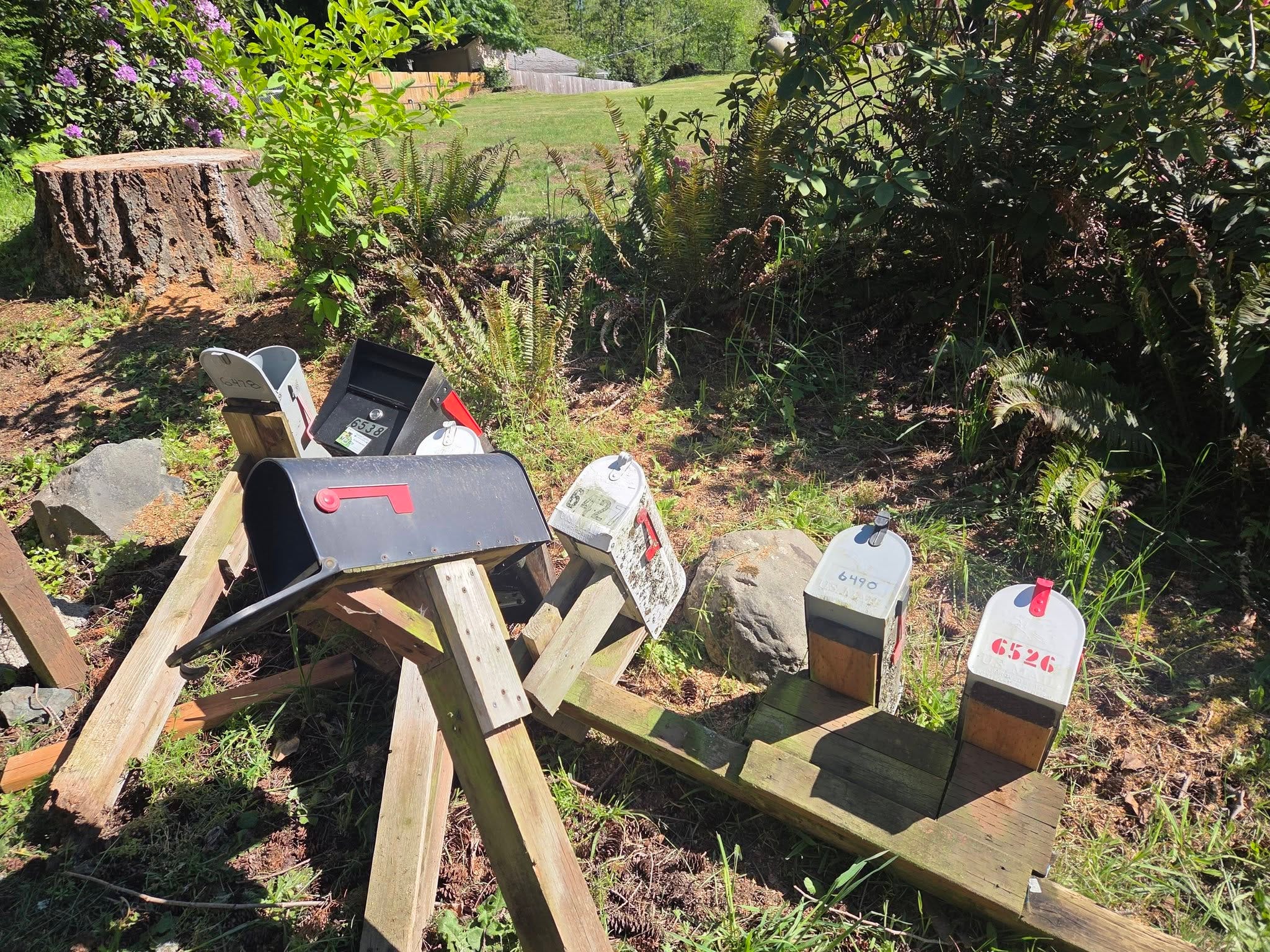
That’s our black mailbox, in the upper left corner. As the photo shows, a group of mailboxes were cobbled together, and somehow ended up being knocked down.
We inspected the damage. It seemed pretty clear to me that the framework supports had rotted in the ground, and the entire row had fallen under its own weight. The other unconnected mailboxes were still standing.
Our neighbors had a different take:
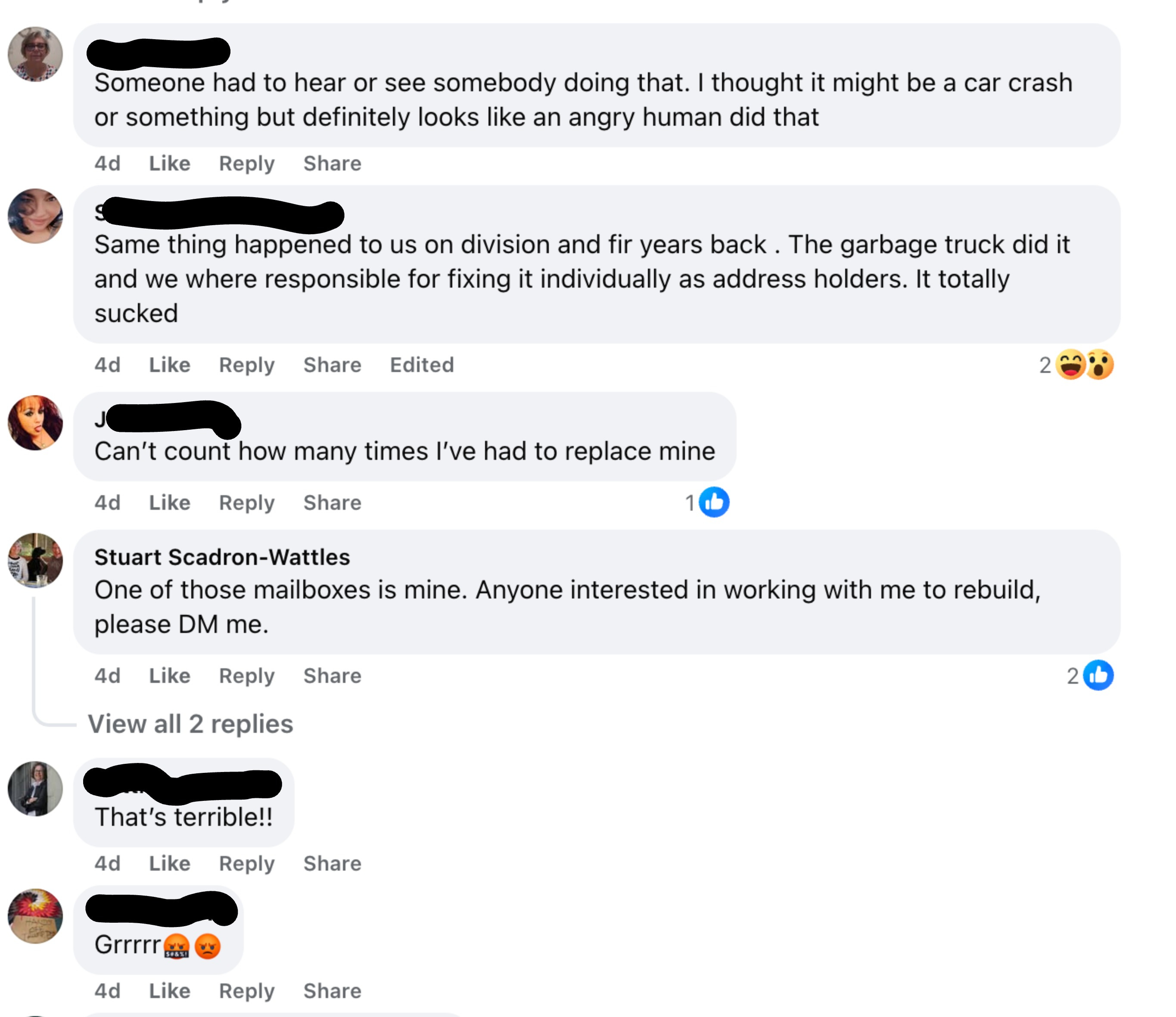
A number of people assumed (and agreed with others) that the mailboxes were deliberately—and perhaps maliciously—targeted. Some got angry. The post got some attention because: emotional content. I’m only showing you the first few. It escalated from there. Non-neighbors piled on the angry, negative comments with some of their own. One just wrote, “Why can’t we have nice things?” and added a simpering emoji.
Remember our list of avoidances to bearing witness from the last post? I’ve added a few to my original list, so I’ll throw them in here:
Avoidance. Vigilance. Judgement. Impatience. Obsession. Fatigue. Distraction. Apathy. Nostalgia.
A few of those showed up in the post comments.
Bearing witness requires staying with the tragic gap—clarifying what has happened, navigating the tragic gap in the light of what you know to be right and true (your values)—and keeping your heart in the place of lamentation. Hold it close, so that the work can be done. Once the lamentation has done its work, your heart will be able to answer the question that comes next:
What is mine to do?
If you read the Facebook comments above, you may remember my request for direct messages (DMs) from other affected neighbors. I knew that the first thing that was mine to do was to realize that it was really “ours to do,” and find out who else out there realized the same.
Four people started a direct message thread. “Dawn” told us that the mailman had informed her that all mail for those boxes would be held until we got them up again. “Cinnamon” told us that she had some concrete piers and some 4x4s. I said I would contribute “labor and $,” and Dawn added that her husband Jason would be able to help after work. A fourth neighbor offered to help as well. We set a date and time to meet. I had other plans—I cancelled them.
One of the rebuilders went back to Facebook and politely answered one of the most angry posts, saying that their own mailbox had been affected, and while it was possible that the row had been hit, it really would not have taken much: the supporting posts had rotted in the ground. The angry posts stopped. Just like that.
We met late afternoon, all of us tooled up. I thought we would evaluate, sketch out a plan, and make an appointment to carry it out. But Cinnamon turned out to be a resourceful, wiry woman who appeared to be in her late 50s— she immediately hatched three alternative building plans. (Good thing I came prepared.) We consulted briefly and agreed on one of them. I began freeing the mailboxes from their tortuously cobbled-together structures, as Jason arrived from work and Cinnamon ferried materials.
“Honestly,” she said, “my kids will be happy I’m cleaning out my shed.”
Jason and Cinnamon began measuring and building the new framework.
Everything needed seemed to have been provided. Cinnamon’s piers gave us a more stable anchor. My electric driver seemed to work better than Cinnamon’s, so we traded. We needed a circular saw for Cinnamon’s 4x4s: Jason had one next door in his garage. One person came by and said he’d redo his mailbox on his own. Another box owner came over and mentioned that she really needed only one of the two newspaper receptacles she had up.
The tragic gap is not some principle. It is a condition that exists in human beings when we encounter and engage with the difference between what we know to be right (according to our values) and what we know to be happening. Most of us avoid it because we know in our heart’s memory that lamentation is unpleasant, and we (mistakenly) equate it with grief, which can seem open-ended and recurring.
But lamentation is distinctively different: a tinge of grief may accompany it, especially if we have suffered a personal loss more substantial than a working mailbox. But if we have done any necessary inner work, the sadness of our lamentation is connected with an event and people other than ourselves. I wrote about a transformation in my last post. The transformation process distills a tincture that is applied to your heart. It uses sadness to place that tincture in the place where you hold your values.
It is at that point that you become involved from the heart and are ready to ask, “What is mine to do?”
While the answer to that question may take a while in coming and may require some trial and error, it will come, and will require your presence.
This is why commenting on social media is an ineffective answer to the question. Social media posts—even those made by human beings—don’t carry human presence. One might reach more humans via social media, but only your presence provides the opportunity for other humans to directly witness what you are carrying in your heart.

Even when we are not direct victims of a particular injustice, we can speak publicly with our presence: in rallies, in marches, in town hall meetings convened by representatives and community groups. Remember that you are carrying the testimony in your heart. Speaking from your body is the strongest path for bearing witness. There’s no need to be eloquent. It’s about your heart, and your reason for being there.
Even without naming a remedy, we can speak to the brokenness we understand and wish to see healed. Asking open questions after you have traversed the tragic gap is better than proclaiming a solution. If you do have a solution, offering it in person as an alternative is another good way to start. Solutions need to be offered through presence, rather than proclaimed.
If we do not fix the problem together, the problem has not truly been fixed.
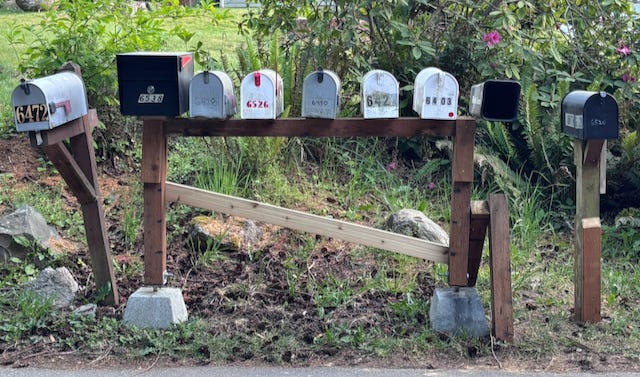
And that brings me back to the mailboxes.
Lots of people online got angry, and offered theories about deliberate destruction. But it did not stop there.
It stopped when we decided to become part of the solution, and one of us turned away the anger of our so-called online supporters.
One of us said, “let’s fix this together.” And another said, “I might have a solution and some materials.” And a third said, “I have a circular saw,” and a fourth said, “I’ll be there to help.” All of us had decided what was ours to do: We each had a personal stake in investing in the solution. (Not all of us were homeowners. One of the four was a recent arrival who was living in a rental.) Some mailbox owners didn’t show up. Another mailbox owner picked up their mailbox and said they would rebuild its support themselves. Those of us rebuilding assumed that we needed to put every affected mailbox back up; we were working for more than ourselves. We stayed until the job was done, gathered our tools, and went back to our homes. As I was loading my car, Jason came out with a leaf blower, cleared the road of debris and sawdust, and had the last word: “We were never here...”
Maybe that’s just how neighbors are, here in our Local Area of More Intensive Rural Development. And maybe it’s just me....
But the way I’m seeing things now, we bore witness, lamented, found what was ours to do, and together...
We each became part of the solution.
Great read, glad I came across you!
Good post, Stuart. Thanks.